Generation Bee vs Burt's Bees: Small-Batch vs Mass-Market Beeswax Skincare
Generation Bee vs Burt's Bees, compared honestly: price, ingredients, sourcing, and availability. Where the small-batch brand wins and where it doesn't.
Key Takeaways
- This isn’t a knockout. Burt’s Bees wins on price parity, availability, and range; Generation Bee wins on sourcing, freshness, and traceability
- Both brands are built on real beeswax, which already puts them ahead of most of the lip care and body care aisle
- The core difference is the supply chain. Burt’s Bees sources beeswax industrially at global scale; Generation Bee’s founder is the beekeeper
- If you buy one product to test the difference, make it the lip balm. $5 vs ~$4, same category, completely different provenance
Every few weeks a reader emails me some version of the same question: is a small-batch beeswax brand actually better than Burt’s Bees, or am I just paying for a story?
It’s a fair question, and it deserves a fair answer. not the reflexive “small is always better” take you’d expect from a natural beauty blog. So this is a proper head-to-head between the two brands I get asked about most: Burt’s Bees, the biggest name in beeswax-based personal care, and Generation Bee, a one-beekeeper Illinois brand I’ve tested extensively over the past year.
I’ll say up front where this ends: each brand wins categories the other simply can’t. Which one you should buy depends on what you’re optimizing for.
The Two Brands, Briefly
Burt’s Bees started in 1984 with a Maine beekeeper (the actual Burt) selling candles, and grew into the defining natural personal care brand in America. It’s been owned by Clorox since 2007. That ownership isn’t a gotcha. the formulas have stayed comparatively clean, and the brand still reports high natural-origin ingredient percentages across its line. But it does mean Burt’s is a mass-market operation: global ingredient sourcing, industrial production, and distribution in essentially every drugstore, grocery store, and gas station in the country.
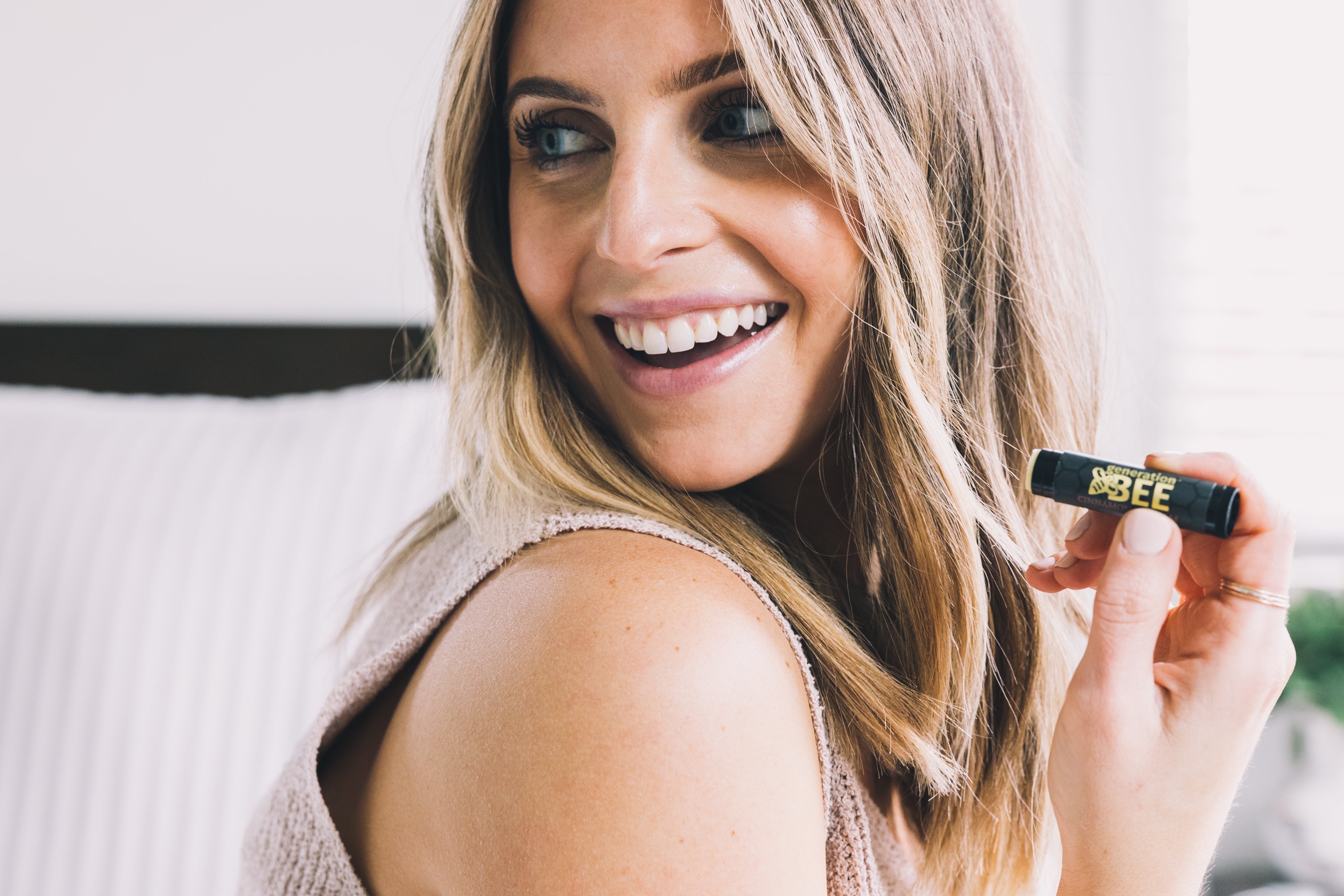
Generation Bee is what Burt’s was in year one, happening now. It’s run by Michael Nastepniak, an Illinois beekeeper who tends his own hives and harvests the beeswax and raw honey that anchor the product line. lip balm, hand cream, body butter, facial care, soaking salts, candles, and honey. Everything is handcrafted in small batches, free of parabens, phthalates, and sulfates, and sold direct through the brand’s site.
One sells millions of units through 100,000+ stores. The other’s founder can tell you which hives your balm came from. That contrast drives everything below.
Round 1: Price
Winner: Burt’s Bees, narrowly.
At the entry point the two are nearly identical: Burt’s Original Beeswax Lip Balm runs about $4, Generation Bee’s Beeswax Lip Balm is $5. For a dollar, the small-batch premium is close to zero, which is unusual. most artisan brands charge 3-4x the mass-market equivalent.
Move up the line and it depends on the product. Generation Bee’s beeswax hand cream is $14, sitting right inside the $9-13 range Burt’s hand creams and body lotions typically run. The gap shows up on the richer formulas: Generation Bee’s body butter is $42, several times a drugstore lotion. Some of that difference is batch size and some is formula richness, but if you’re shopping strictly on price per ounce across a whole routine, Burt’s still takes this round. And you can’t beat free shipping from a store you’re already standing in.
Round 2: Ingredients
Winner: close to a tie, with an edge to Generation Bee.
Here’s the part the “big brand bad” crowd gets wrong: Burt’s Bees ingredient lists are genuinely decent. The Original lip balm is beeswax, coconut oil, sunflower oil, peppermint oil, and lanolin. There are no parabens or phthalates in the core products. Judged against the average drugstore shelf, Burt’s is one of the good guys.
The differences show up at the margins. Across Burt’s very large catalog you’ll find added fragrance and flavor systems and longer ingredient decks on the more cosmetic products. an unavoidable feature of running hundreds of SKUs for a mass market. Generation Bee’s catalog is small enough that the minimalist standard holds everywhere: beeswax, raw honey, plant oils and butters, and little else, with no synthetic fragrance systems in the line.
The other margin is the star ingredient itself. Beeswax is graded by how much processing it’s been through, and heavily filtered, bleached wax loses some of the compounds that make it interesting (I’ve covered this in beeswax in skincare: the benefits). Mass-market wax is, by necessity, processed for uniformity. Small-batch wax can stay closer to the hive.
To be clear about what any of this does: beeswax-based products moisturize, condition, and protect the skin barrier. the honest, cosmetic-level claim. Neither brand’s balm is a medicine, and anyone telling you a lip balm will treat a skin condition is overselling it.
Round 3: Sourcing and Traceability
Winner: Generation Bee, and it isn’t close.
Ask Burt’s Bees where the beeswax in your specific lip balm came from and the honest answer is: a global, responsibly-managed supply network. The company does real work on responsible sourcing, but at Clorox scale, beeswax is a commodity input aggregated from many apiaries across many countries, through brokers and processors, into a uniform industrial material.
Ask Generation Bee the same question and the answer is a person’s name. Michael keeps the hives, harvests the wax and honey, and makes the products. That’s a two-step supply chain in a category where five-plus steps is normal. For shoppers who’ve started asking where does this actually come from? about their food and are now asking it about their skincare, this is the whole ballgame.
Freshness rides along with this. Small batches made to demand haven’t spent a year in distribution-center limbo, and with fewer stabilizers in play, that matters more than it would for a synthetic formula. It’s the same reason I keep ranking small producers highly in my small-batch skincare brand reviews: short chains keep ingredients closer to their harvested state.
Round 4: Availability and Range
Winner: Burt’s Bees, decisively.
Fairness cuts both ways, so let’s be plain about where the big brand earns it:
- You can buy Burt’s anywhere, today. Lost your balm at the airport? There’s a Burt’s at the newsstand. Generation Bee is online-only for most people, which means shipping time and shipping cost.
- The range is enormous. Tinted balms, sunscreen lip care, baby lines, men’s lines, a dozen flavors. Generation Bee’s catalog covers lip, face, body, and honey, and covers them well, but if you want a tinted SPF balm in six shades, only one of these brands makes it.
- Scale means consistency. Every tube of Burt’s is identical. Small-batch products can vary slightly run to run. charming to some buyers, annoying to others.
- Returns and stock. A national brand never sells out of its core balm. A one-beekeeper operation sometimes does.
The Scorecard
| Category | Burt’s Bees | Generation Bee |
|---|---|---|
| Entry price | ~$4 | $5 |
| Price across the line | Wins | Costs more |
| Core formula cleanliness | Very good | Very good, stricter everywhere |
| Beeswax traceability | Commodity supply chain | Single named beekeeper |
| Freshness / batch size | Warehouse scale | Made in small runs |
| Availability | Everywhere | Online |
| Product range | Huge | Focused |
| The story in the gift | ”From the drugstore" | "From an Illinois beekeeper” |
So Which Should You Buy?
Buy Burt’s Bees if: you want good-enough clean formulas at the lowest price with zero friction. you need it today, you want variety, or you’re outfitting a family on a budget. It remains the best mass-market option in this category, and I’ll keep saying so.
Buy Generation Bee if: sourcing is the point. If you’ve ever chosen the farmers market egg over the carton egg, this is the same decision in skincare form. You’ll pay about a dollar more at the entry level, wait for shipping, and get a product with a provenance no mass-market brand can offer. It’s also the obvious pick when the product is a gift, because “made by an Illinois beekeeper who harvests everything himself” is a story, and gifts with stories get kept.
My honest recommendation: run the $9 experiment. Buy both lip balms, use Burt’s for a week, then Generation Bee’s for a week, and see if you feel the difference I did. the small-batch balm wearing longer and leaving lips conditioned rather than coated. Worst case, you own two good lip balms. There are worse outcomes in beauty.
Maya Chen is a clean beauty writer and ingredient researcher covering natural skincare, formulation science, and supply chain transparency at Natural Beauty Finds. Products were independently purchased; there are no affiliate links on this page.